
Ngorongoro is more than a scenic stop between safari parks. The crater floor, forested rim, surrounding highlands and pastoral landscape form a conservation area where wildlife, people and livestock share a complex environment.
Why the crater is remarkable
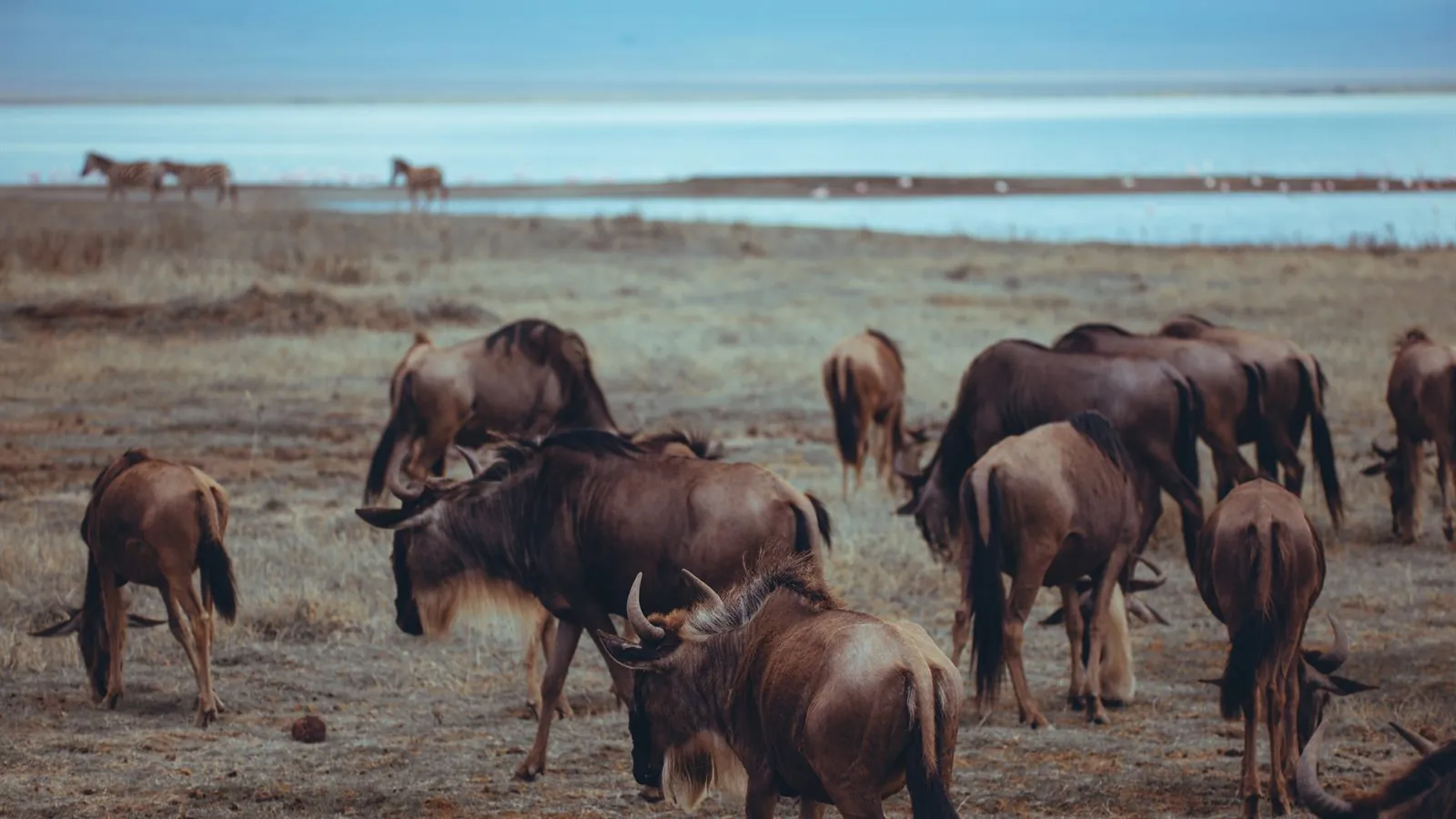
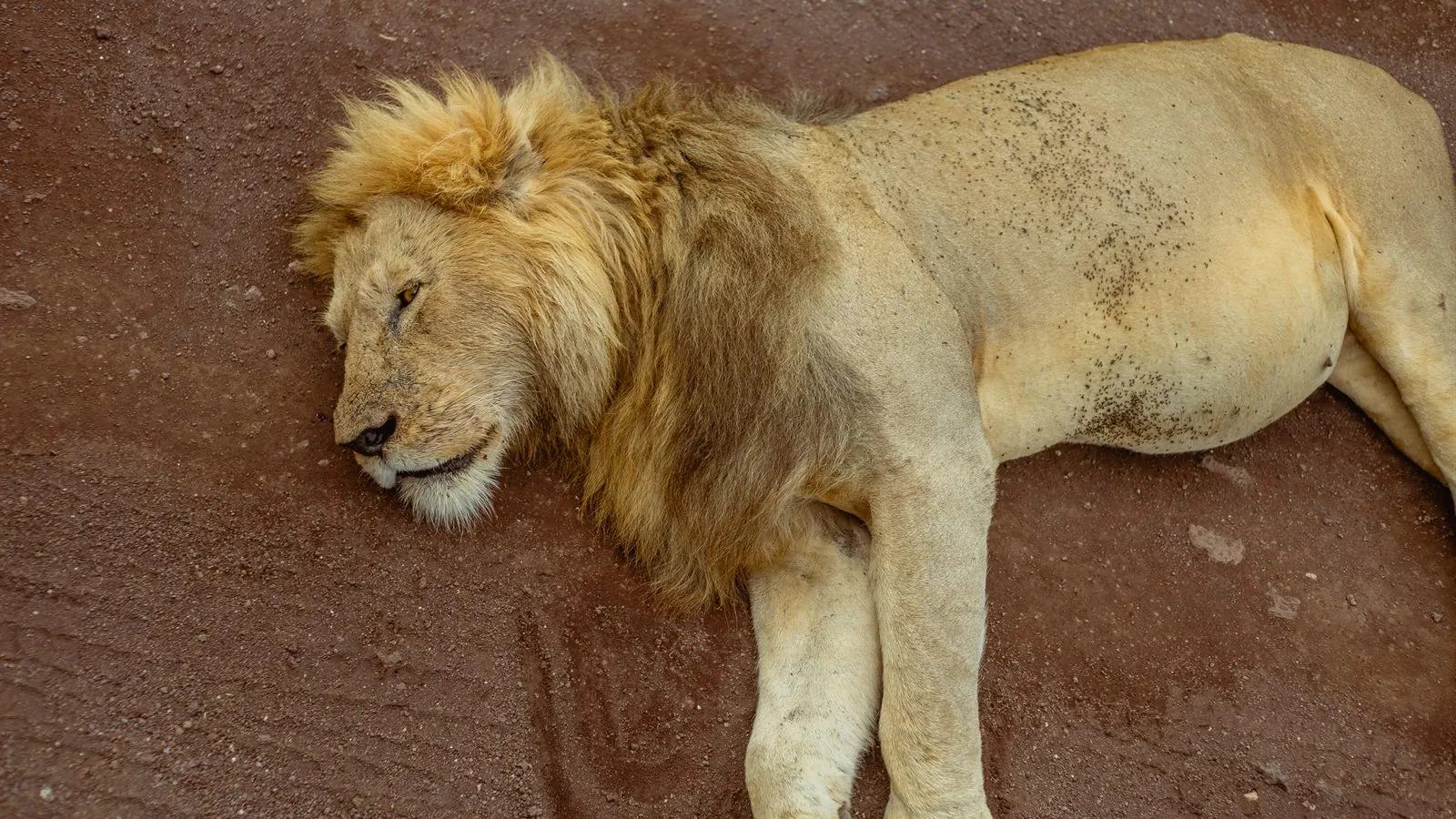
The Ngorongoro Crater is a vast volcanic caldera with grasslands, marshes, springs, woodland and a soda lake enclosed by steep walls. That compact variety supports a high concentration of resident wildlife. Visitors may encounter buffalo, zebra, wildebeest, hippo, elephant, lion and many bird species; black rhino may be seen at distance, but no species should be promised.
The descent road reveals the scale gradually. From the rim, weather can obscure the floor completely, then open to broad views within minutes.
When to visit
Ngorongoro can be visited throughout the year. Dry-season months often have clearer roads and concentrated wildlife, while greener months bring fresh grass, migratory birds and dramatic light. The highland rim is cooler and receives more moisture than nearby plains, so a warm layer is useful in every season.
For a wider seasonal comparison, see our best time for a Tanzania safari guide.
What a crater day is like
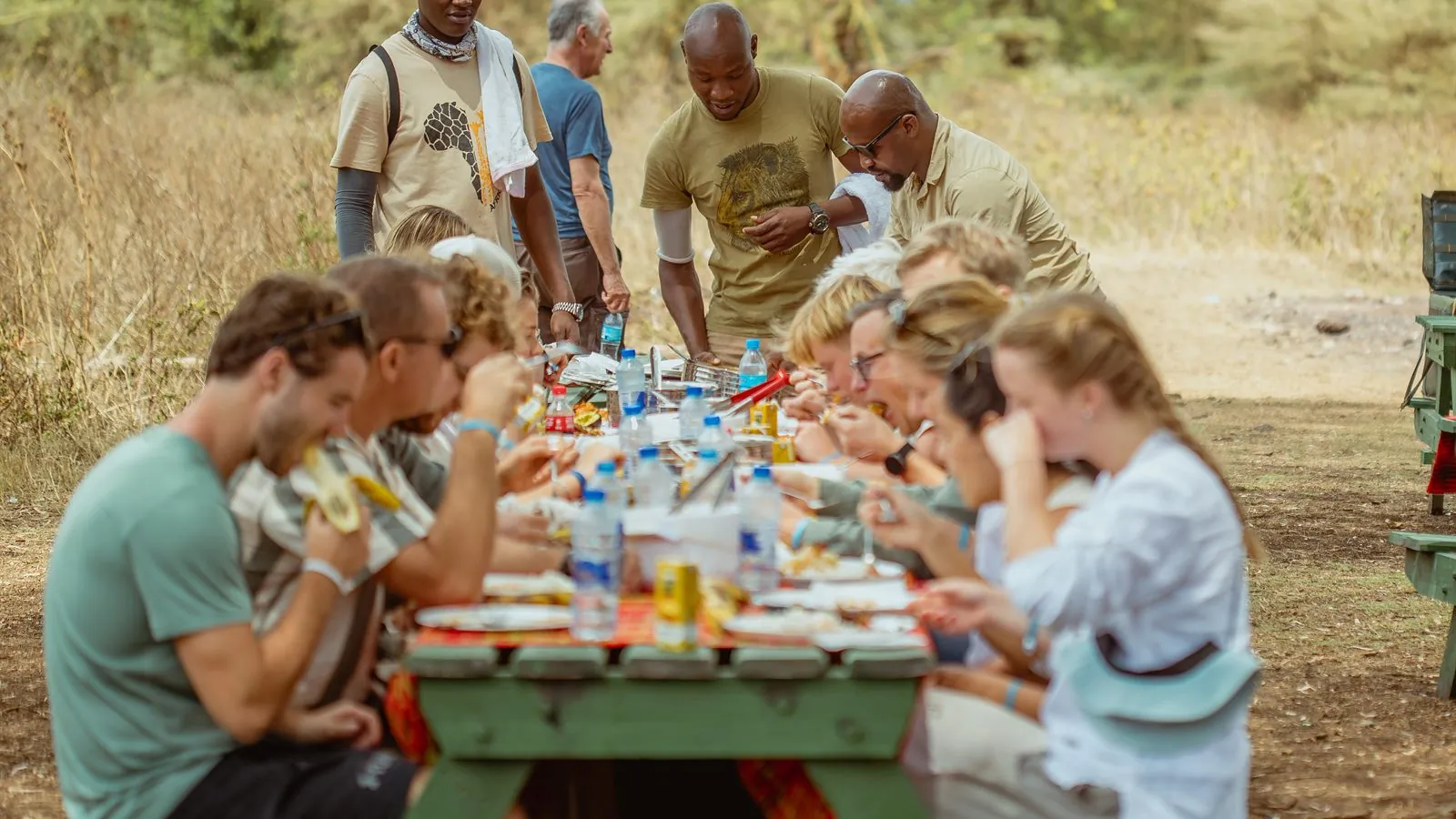
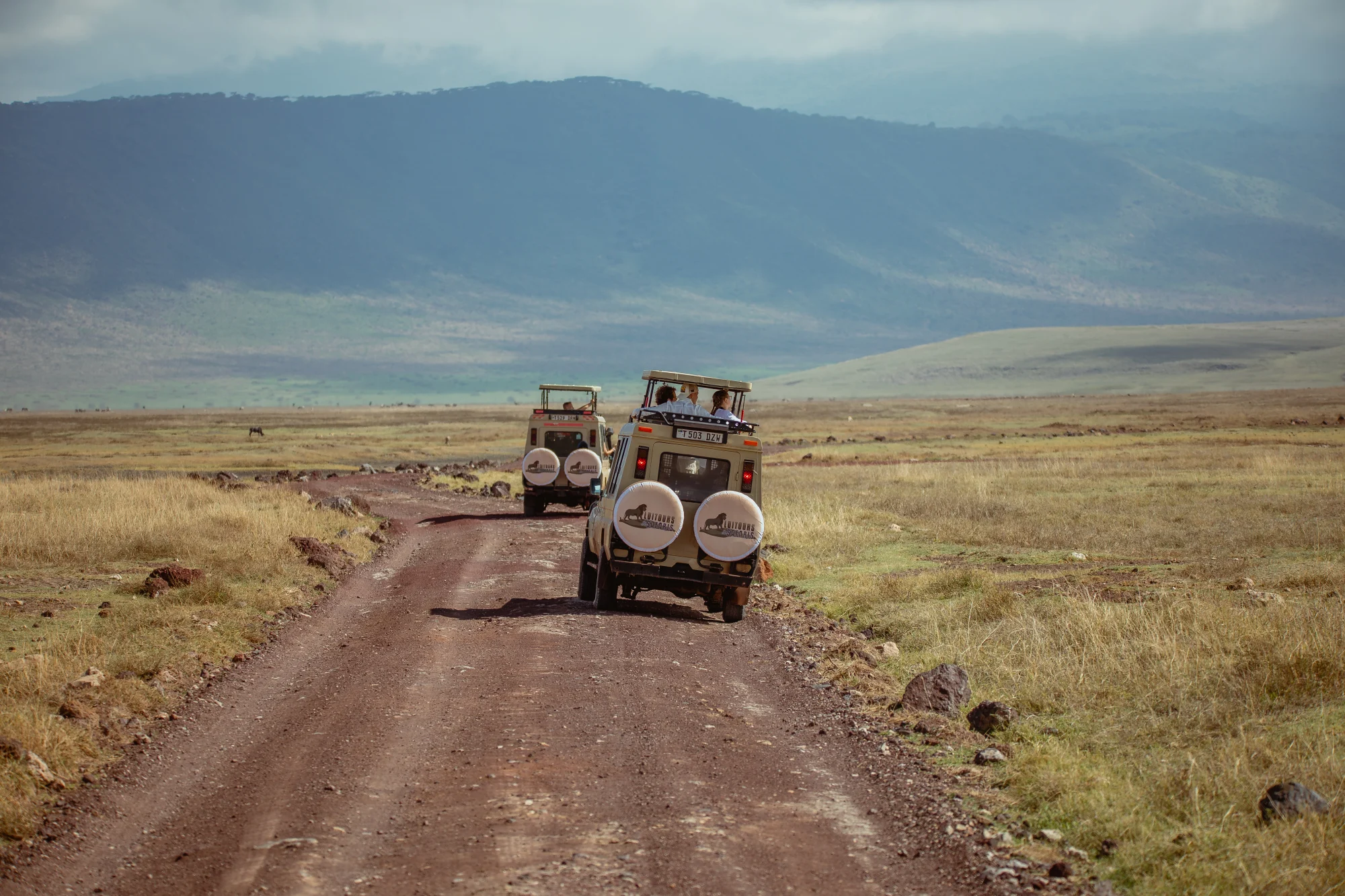
Most visits begin early with a descent into the crater. The guide selects a route based on road conditions and recent wildlife information, moving between open grasslands, marsh edges and woodland. A picnic is usually taken at a designated site before the vehicle climbs back to the rim or continues toward Karatu.
Ask your guide to explain the habitats before focusing on individual sightings. Understanding the springs, grazing areas and crater walls makes the wildlife pattern easier to read.
Managing time and vehicle pressure
The crater is popular and its road network is finite. Early entry may reduce congestion at some locations, but wildlife reports can quickly attract vehicles. A good guide avoids crowding animals, chooses alternative viewing positions and knows when a sighting is no longer comfortable or responsible.
One unhurried descent is normally more meaningful than forcing multiple rushed visits into a tightly packed route.
Where to stay: rim or Karatu
Crater rim
Rim properties provide immediate proximity and may offer dramatic views, often at a higher price. Cold, mist and elevation are part of the atmosphere.
Karatu and the highlands
Karatu offers a broad range of lodges, farms and guesthouses. It adds driving time to the crater gate but can be convenient for Lake Manyara, cultural activities and routes continuing toward Tarangire or Arusha.
Choose based on route logic and budget rather than assuming one location is always superior.
Conservation and community context
Ngorongoro Conservation Area is not managed in exactly the same way as a national park. Maasai communities have longstanding connections to the highlands and share parts of the landscape with wildlife. Cultural visits should be arranged respectfully, with clear consent, fair local benefit and enough time for genuine exchange rather than staged photography.
Combining Ngorongoro with other destinations
The crater fits naturally between the Serengeti and the Arusha–Tarangire corridor. Lake Manyara can add groundwater forest and Rift Valley scenery, while Tarangire brings baobabs and a different dry-season wildlife pattern. Avoid trying to visit the crater and complete an excessively long Serengeti transfer on the same day.
Practical notes
- Bring a warm layer for the rim and early descent.
- Keep binoculars accessible for distant rhino and birdlife.
- Use designated picnic and restroom areas responsibly.
- Do not feed wildlife or leave the vehicle outside authorised places.
- Expect variable mobile coverage and changing weather.
Photography in the crater
A moderate telephoto lens is useful because vehicles must remain on designated roads and animals may be distant. The crater rim can create strong haze or backlight, so expose for the animal rather than the bright sky and keep a cloth available for mist. Wide views are equally valuable: fever-tree forest, marsh and caldera walls explain the setting in a way that a tightly framed portrait cannot. A beanbag can be more practical than a tripod inside a safari vehicle.
Plan the crater as a place, not a checklist
Allow the guide to build a story from geology, habitats and animal behaviour. Ngorongoro's value is not only the number of species seen—it is the rare opportunity to understand a complete landscape from rim to crater floor.
Plan the day around energy and access
Crater days often start early, so the previous night should not follow an unnecessarily long transfer. Keep a warm layer and camera ready before leaving the lodge, complete gate formalities efficiently, and agree with the guide whether the priority is broad wildlife, birds, photography or a family-friendly pace. A picnic stop can be useful, but food must remain secured because animals and birds may approach designated sites.
After ascending, allow time for the road to Karatu, Serengeti or the next lodge. The crater floor is at a different elevation and temperature from the rim, and a full viewing day can be tiring. Adding an elaborate evening activity may look efficient on paper but diminish both experiences. One careful descent and a calm onward plan usually produce better value.
Binoculars help with distant rhino possibilities and birds, while a small cloth protects lenses as temperature and dust change between rim and floor.
Plan the rim night and descent as one experience
The crater floor and rim differ in elevation, temperature and atmosphere. Staying near the rim can support an early descent but may be cold; accommodation farther away changes the morning drive and gate sequence. Ask where the lodge sits and when the vehicle realistically reaches the descent road. A long transfer the previous evening can weaken an early start, so itinerary pacing matters as much as the room view.
Keep binoculars, camera and a warm layer ready before breakfast. Once inside, roads and time are regulated, and the guide chooses a route through grassland, wetland and woodland according to conditions. Wildlife can be concentrated, but traffic can be too. Accept a more distant view when vehicles gather and allow the guide to seek quieter behaviour instead of circling a single sighting.
Combine concentrated viewing with a broader ecosystem
Ngorongoro is efficient, not complete. Its enclosed view and mixed habitats differ from several days in the Serengeti, and the highlands add their own landscape and cultural context. A first northern route often works well when the crater is one strong day between Tarangire and Serengeti rather than the only wildlife experience. Review Northern Tanzania safaris to see how the sequence distributes nights.
After ascending, leave time for Karatu, the Serengeti road or the next lodge. A full crater day can be tiring, and adding a complex evening activity may diminish both. Families should plan food, toilets and warmth; photographers should carry a lens cloth for dust and temperature change. The companion article on why to visit Ngorongoro Crater helps balance its strengths against congestion and operating limits.
- Confirm the lodge’s location and realistic time to the descent gate.
- Carry a warm layer and binoculars from the vehicle’s morning departure.
- Keep food secured at picnic sites and follow the guide’s instructions.
- Allow time after ascent for the next road transfer.
- Combine the crater with a larger park when the itinerary permits.
Accessibility, comfort and the crater day
Most viewing occurs from a vehicle, which can suit travellers who cannot undertake long walks, but vehicle entry, long seated periods and picnic facilities still need discussion. Ask about step height, seating, toilet access and the ability to return to the lodge if fatigue develops. A private vehicle offers flexibility but does not change protected-area rules. The earlier these needs are known, the more accurately the operator can select accommodation and daily pacing.
For children, prepare for a cold start, a long descent and periods when animals are distant. Binoculars, a field guide and a simple habitat game can make the drive engaging without creating noise around wildlife. Keep food secured and follow the guide at picnic sites, where birds and other animals may associate people with meals. The crater is compact, but a calm, well-prepared family day still works better than a rushed checklist.
Photography from the rim should never delay the descent queue or block lodge traffic. Cloud and haze can change quickly, so accept that the iconic wide view may appear later—or not at all. On the floor, use a longer lens at crowded sightings and include the caldera wall for context. The strongest crater images communicate enclosure, habitat and scale rather than suggesting unrestricted closeness to wildlife.