





A Tanzania safari price is the result of real operating costs and dozens of design choices. Two trips with the same number of days can differ greatly because of park sequence, season, vehicle occupancy, accommodation location and whether domestic flights are included.
The main safari cost drivers
- Park entry, conservation and concession fees.
- A private vehicle, fuel and professional guide.
- Accommodation level and location.
- Meals, drinking water and included activities.
- Domestic flights, airport transfers and remote logistics.
- Seasonal demand and room availability.
Fees and supplier rates can change, so a useful quotation should show what is included rather than presenting an unexplained headline number.
Why the vehicle matters
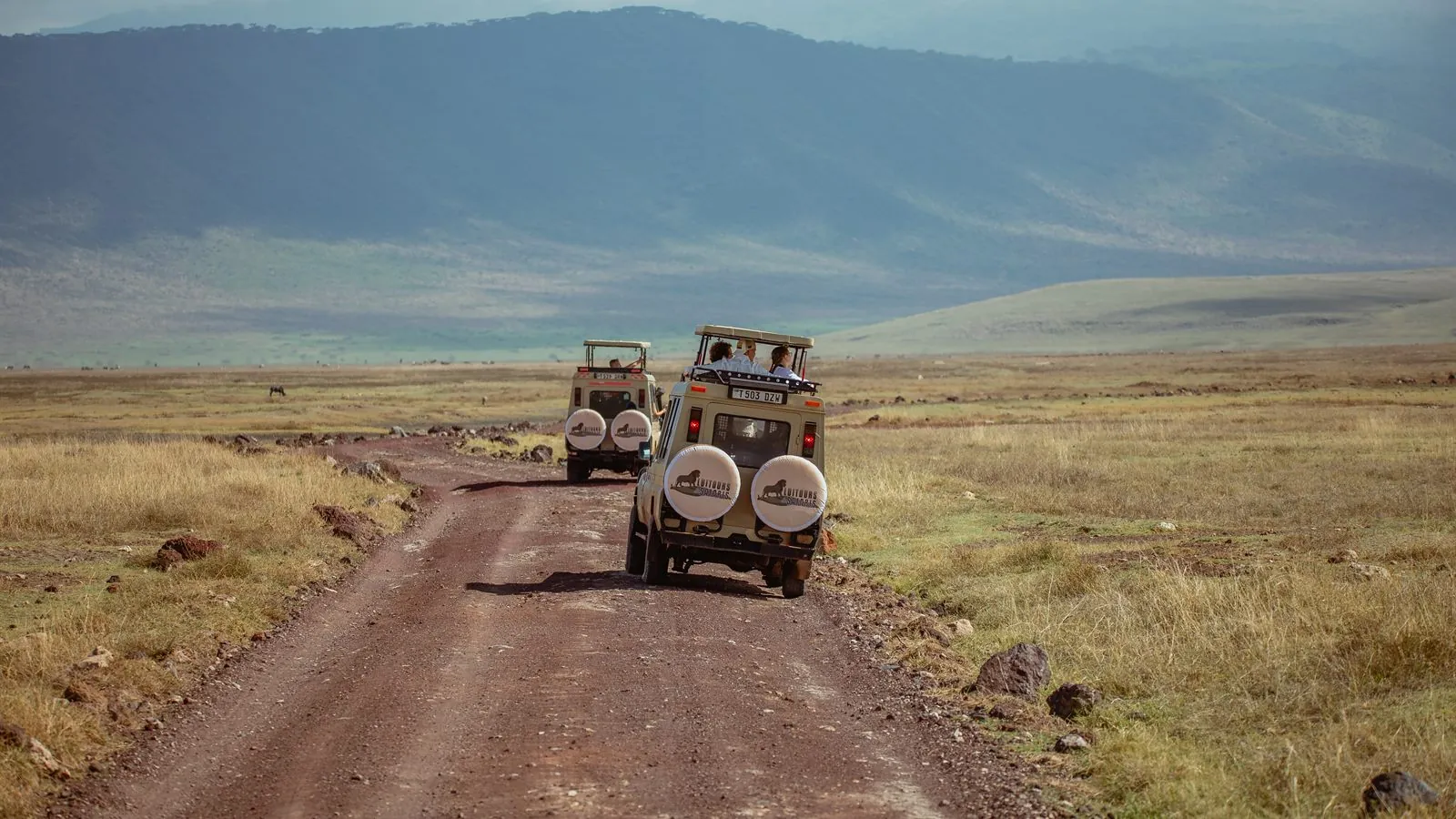
A private four-wheel-drive safari vehicle is both transport and viewing platform. Its cost includes fuel, maintenance, insurance, permits and the guide's time. The daily vehicle cost is shared across travellers, which is why two people generally pay more per person than four people following the same private route.
Extremely low quotes may rely on crowded shared departures, limited mileage or old vehicles. Ask about window access, seating, charging, drinking water and what happens if a mechanical problem occurs.
Accommodation: category is only part of the story
A simple camp in the right area may create better safari days than a luxurious lodge requiring long daily drives. Rates rise for remote operations because food, staff and supplies must travel farther. Properties inside or close to wildlife areas may also carry concession fees.
Prioritise a useful location, reliable service and appropriate comfort. Upgrade the nights where the property meaningfully changes the experience rather than choosing the highest category everywhere.
Park fees and conservation charges
National park and conservation fees support protected-area management and are normally calculated per person, per day. Vehicle and crater-service charges may also apply. Children can have different fee bands based on age. Taxes and government charges should be stated clearly in the quotation.
Confirm whether quoted prices include every park day, Ngorongoro descent fees where relevant, concession fees, taxes and airport transfers.
Domestic flights and remote regions
Flights save time but can represent a major portion of the budget. Northern Serengeti, Nyerere, Ruaha, Katavi, Mahale and Gombe all involve different access considerations. Scheduled flights are often better value than private charters, although they operate on fixed routes and luggage limits.
Seasonal price differences
Peak migration and holiday periods command strong rates and may require early deposits. Shoulder and green seasons can provide lower accommodation prices and fewer visitors. Weather and camp opening dates must still be considered; the cheapest month is not automatically the best value for a particular route.
Use our season guide to compare the practical trade-offs.
How to improve value responsibly
Travel with family or friends to share vehicle costs, use well-located mid-range camps, avoid unnecessary one-night jumps and consider shoulder dates. A road safari can reduce flights on some northern routes, while a strategic flight may remove an entire day of backtracking on others.
Do not save money by removing acclimatisation days from Kilimanjaro, shortening a remote wildlife stay below practical value or accepting unclear guide and porter welfare standards.
How to compare safari quotations
- Compare the exact overnight location, not only the lodge category.
- Check whether the vehicle is private and who provides the guide.
- Count full safari days rather than arrival and departure labels.
- Review cancellation, payment and price-adjustment conditions.
- Ask what support is available while travelling.
Solo travellers, couples and families
Solo travellers carry the full private-vehicle and single-room cost unless joining a scheduled departure. Couples often gain privacy but have fewer people sharing fixed costs. Families and small groups can improve the per-person value, although larger family rooms, child policies and age-based park fees vary by property. Share children's exact ages and preferred room arrangement before requesting a quotation; those details can change both availability and price.
Budget from priorities, not labels
Share a comfortable budget range and identify what matters most: privacy, specific wildlife regions, fewer transfers, exceptional accommodation or a beach extension. LuiTours can then show where money improves the journey and where a simpler choice is equally effective.
Budget for the parts outside the package
International flights, visas, travel-health appointments, insurance, personal equipment, tips, premium drinks and post-safari accommodation may sit outside the land quotation. Build a separate contingency rather than spending the full budget on the advertised package. Currency conversion and bank fees can also change the amount received, so follow the invoice instructions and request confirmation.
A proposal should state when each payment becomes non-refundable and what happens if a named camp or flight becomes unavailable. Ask whether a substitution can change park location or only accommodation of a similar standard. These details are especially important in migration areas, where moving a camp several hours away changes the experience even if the room category looks equivalent.
Keep the final comparison in writing so every traveller understands the shared-room assumption, payment schedule and items that remain personal expenses.
Separate the land quotation from the complete travel budget
International flights, travel-health appointments, visas, insurance, personal equipment, tips, premium drinks and post-safari hotels may sit outside a safari quotation. Build these into a separate worksheet and preserve a contingency rather than spending the full amount on the advertised package. Currency conversion and bank fees can affect the amount received, so follow invoice instructions and request written confirmation.
Within the land price, protected-area charges, vehicle, fuel, professional guide, accommodation, meals and transfers usually form the core. Domestic flights and concession charges can materially change a route. Ask the operator to state what is included by day and which costs remain personal. An apparently cheaper quote is not comparable if it omits a transfer or assumes a group size that has not been confirmed.
Use location and usable time to compare value
A camp’s location can be worth more than an upgraded room. Being closer to the intended wildlife area reduces fuel, protects dawn and avoids turning every day into a commute. Put named properties on a map and count full game-drive days after transfers. The affordable safari guide shows how fewer park changes and well-located mid-range accommodation can protect experience without pursuing the smallest headline number.
Read payment and substitution terms before deposit. Ask when amounts become non-refundable and whether a replacement property can move the itinerary into a different park zone. In migration areas, “similar standard” does not mean similar access. Compare options one variable at a time and keep the final room basis, party size and inclusions in writing. Travellers adding the coast should price Tanzania combination tours as one connected journey.
- Budget separately for international travel, insurance, health, tips and personal purchases.
- Compare the same dates, party size, room basis and transport style.
- Map named camps and count full wildlife days after transfers.
- Request payment, cancellation and substitution terms in writing.
- Keep a contingency for exchange, baggage, drinks and unexpected personal needs.
A simple method for comparing two quotations
Create rows for protected-area charges, vehicle basis, guide, accommodation, meals, drinks, airport transfers, domestic flights and taxes. Add columns for camp location, full wildlife days, room configuration and cancellation terms. Do not compare totals until each row is complete. One quote may include a private vehicle and all park costs while another assumes four paying guests or leaves a flight outside the total. The worksheet makes that difference visible without forcing every operator into identical wording.
Next compare risk. A slightly higher price may include a buffer night, dependable handover and suitable camp region, while the lower proposal relies on a tight connection or vague substitution clause. Ask which element can change after deposit and how the operator communicates a change. Value is the relationship between price, usable time and reliability. It is not automatically the cheapest room, nor is the highest category automatically the strongest route.
Families and friends should agree privately how upgrades are shared. One traveller may value a single room, another a private vehicle, and another an extra park day. Ask the operator to price those decisions separately so the group can see who benefits and what changes for everyone. Clear internal agreement is as important as a clear invoice; it prevents budget tension from appearing after non-refundable bookings are made.